

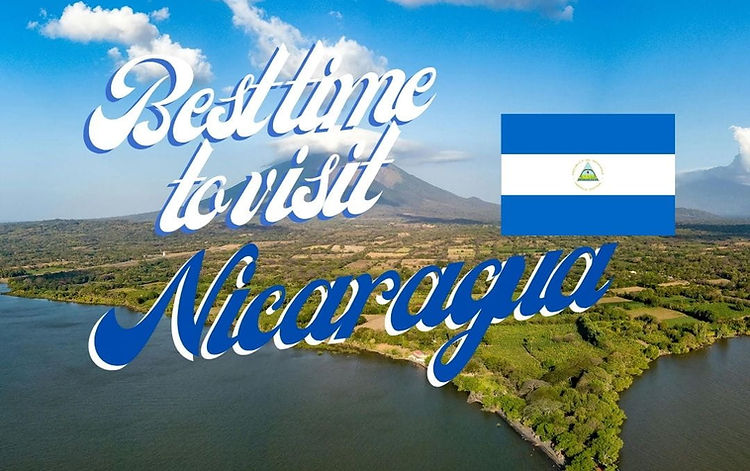
Best time to visit Nicaragua
Nicaragua, the land of lakes and volcanoes, welcomes travelers with a climatic diversity that goes far beyond the simple label of "tropical." To truly get to know the soul of this Central American gem, it is worth taking a look at the fine nuances between the radiant sunny days and those mystical moments when the heavens open their floodgates.
Table of Contents:
When the golden sun crowns the volcanoes
The classic season for explorers begins in November and lasts through April. During this phase, the "Verano"—the dry season—rules over the land, bathing the colonial facades of Granada and León in an almost ethereal, warm light. It is an era of reliability: those planning hikes to the mighty crater rims of Masaya or Mombacho are usually rewarded with views that stretch to the very edge of the horizon. The paths are firm, the air is crisp, and the dusty tracks of the hinterland can be conquered without a struggle, while the cool trade winds soften the heat of the day.

The Awakening of the Emerald Wilderness
As May arrives, the face of Nicaragua undergoes a dramatic transformation. With the first heavy downpours of the rainy season—the "Invierno"—the ochre lowlands turn into a dense, emerald-green carpet within a matter of days. For nature lovers, this is the truly magical season; the vegetation literally explodes with vitality, and the waterfalls in the cloud forests plunge powerfully into the depths. While the showers are often intense, they are usually short-lived and limited to the late afternoon, making the morning the perfect stage for observing the country's exotic wildlife.
Cool Retreat in the Misty Coffee Gardens
While the lowlands groan under sweltering heat in March and April, with temperatures soaring well above 86°F, the northern highlands around Matagalpa and Estelí offer a refreshing alternative. Up here, where clouds hang low in the treetops, a spring-like climate prevails year-round. The best time for hiking through the coffee plantations is between December and March, when harvesters pick the ripe red cherries and nighttime temperatures can drop low enough that you'll gratefully curl up in a blanket—a rare luxury in these latitudes.

Dance of the Waves and the Song of the Ocean
For those who seek their fortune on a surfboard, different laws of nature apply. The Pacific coast around San Juan del Sur is world-renowned for its consistent offshore winds that blow nearly year-round, perfectly shaping the waves. While beginners appreciate the gentler days between November and March, pros are drawn to the coast primarily from May to October. During this time, distant storms in the South Pacific bring massive swells that transform Nicaragua into an adventure playground for wave riders who aren't afraid of a tropical downpour.
The Hidden Smile of the Caribbean Coast
A completely different climatic chapter begins on the Atlantic side and the Corn Islands. In contrast to the rather dry west, the east is more humid and unpredictable year-round. If you dream of crystal-clear waters and white sand, you should aim for the months of February to April, as this represents the most stable phase in this region.
During this period, temperatures typically hover around 86°F (30°C). Between July and October, however, caution is advised: hurricane season in the Caribbean Sea casts its shadow, and heavy storms can disrupt the idyllic peace of the islands.

The Silence Between the Tides of Tourists
Beyond the climate charts, there is a precious span of time that is often overlooked: the "Canícula." In July and August, the rains frequently take a short break, and the weather settles for a few weeks. It is a phase of calm before the stormy September—ideal for travelers who wish to enjoy nature’s lush splendor without the massive tourist crowds of the Christmas season. During these weeks, Nicaragua shows its most authentic side, as prices drop and you find yourself sharing secluded beaches almost exclusively with the local fishermen.

Best time to visit Nicaragua: Key Points
The best time to travel to Nicaragua is during the dry season, which runs from November to April. During these months, you can expect less rain, pleasant temperatures, and lower humidity. However, be aware that temperatures can become very hot in March and April.
Factors to Consider When Planning Your Trip:
The Rainy Season: The rainy season in Nicaragua lasts from May to October. During this time, heavy rainfall can occur, especially in the afternoon. However, temperatures remain warm and the vegetation is lush and green.
The Caribbean Coast: This region has a tropical climate with high temperatures and high humidity year-round. There is no distinct dry season, but the rainiest months are May through December.
The Pacific Coast: The Pacific side has a drier climate than the Caribbean coast. The ideal time to visit this area is from November to April.
The Central Highlands: Nicaragua’s central highlands offer a more temperate climate than the coastal regions. Temperatures remain pleasant year-round, and there is significantly less rainfall than on the coasts.
Summary: Best Travel Times by Region
Region | Best Time to Visit |
Pacific Coast | November to April |
Caribbean Coast | January to April |
Central Highlands | November to April |
Ultimately, the best time to visit depends on your personal preferences and travel plans. If you prefer dry weather and comfortable temperatures (often ranging from 75°F to 85°F), the dry season is your best bet. However, if you enjoy lush landscapes and fewer crowds, the rainy season may be the better option for you.
Additional Tips for Your Trip to Nicaragua:
Book in advance: Secure your accommodation and flights early, especially if you plan to travel during the peak season.
Pack light: Bring breathable, lightweight clothing.
Stay protected: Don’t forget insect repellent and sunscreen (the sun can be intense, often reaching over 90°F in the spring).
Be rain-ready: Always be prepared for a downpour, particularly if you are traveling between May and October.
Stay informed: Check current travel advisories and local weather forecasts before you depart.

Climate Table: Nicaragua
Nicaragua has a tropical climate characterized by a clear distinction between the rainy and dry seasons. Since climatic conditions vary significantly between the Pacific coast (tends to be hot and dry) and the Caribbean coast (very humid and rainy), the following table is based on data from the capital, Managua, which is representative of the country's most populated region (the Pacific region).
Month | Avg. High (°C) | Avg. High (°F) | Avg. Low (°C) | Avg. Low (°F) | Precipitation (mm) |
January | 31°C | 88°F | 21°C | 70°F | 5 mm |
February | 32°C | 90°F | 21°C | 70°F | 2 mm |
March | 34°C | 93°F | 22°C | 72°F | 2 mm |
April | 35°C | 95°F | 23°C | 73°F | 10 mm |
May | 34°C | 93°F | 24°C | 75°F | 150 mm |
June | 31°C | 88°F | 24°C | 75°F | 250 mm |
July | 31°C | 88°F | 24°C | 75°F | 180 mm |
August | 31°C | 88°F | 24°C | 75°F | 230 mm |
September | 31°C | 88°F | 23°C | 73°F | 300 mm |
October | 30°C | 86°F | 23°C | 73°F | 280 mm |
November | 30°C | 86°F | 22°C | 72°F | 80 mm |
December | 31°C | 88°F | 21°C | 70°F | 15 mm |
Key Climate Zones & Regional Characteristics
Pacific Coast (West): Here, the divide between the dry season (November to April) and the rainy season (May to October) is most distinct. Humidity rises significantly during the rainy season.
Central Highlands (Matagalpa, Estelí): Due to the high altitude, it is noticeably milder here. Daytime temperatures often range between 72°F and 81°C (22°C to 27°C), while nights can cool down to 59°F (15°C).
Caribbean Coast (East): This region is substantially more humid. It rains more frequently throughout the year compared to the West, and the dry season is less pronounced. Between June and November, there is also a certain risk of tropical storms (hurricanes).
Best Time to Visit
The best time to travel for most of the country is from December to April.
December/January: Ideal, as nature is still lush and green after the rainy season, yet temperatures are pleasant and paths are dry.
March/April: The hottest months. Perfect for a beach vacation, but often very dusty and oppressive for hiking in the lowlands.

Why travel to Nicaragua?
Nicaragua is often still considered a hidden gem in Central America, offering an impressive blend of untouched nature and vibrant history. Travelers to the country immerse themselves in a world of contrasts: from the colonial architectural gems in cities like Granada and León to the rugged, steaming peaks of its numerous volcanoes. The warm hospitality of the locals creates an atmosphere that makes you feel instantly welcome, while the smaller crowds compared to neighboring countries allow for a particularly authentic travel experience.
Adventure Between Two Oceans
The country's geographical diversity opens up endless possibilities for outdoor activities and relaxation. While the Pacific coast entices visitors with world-class surf spots and picturesque bays, the Caribbean coast—with the remote Corn Islands—exudes a laid-back, tropical flair far from mass tourism. Inland, the vast Lake Nicaragua and its twin-volcano island, Ometepe, invite travelers to dive into an almost magical landscape perfect for hiking, kayaking, and spotting rare wildlife. This combination of adventurous spirit and pristine tranquility makes Nicaragua a destination that both invigorates the soul and offers deep relaxation.

What are the must-see places in Nicaragua?
Nicaragua is an absolute hidden gem – not as crowded as Costa Rica yet, but packed with volcanic action, colonial charm, and laid-back vibes.
Here is the ultimate list of places you cannot miss:
🌋 Masaya Volcano: A Glimpse into the Abyss
This is one of the few places in the world where you can drive your car right up to the edge of the crater.
The Highlight: If you go after sunset, you can see the orange glow of actual lava deep within the crater. It’s impressive and a little eerie at the same time.
🏘️ Granada: Colonial Colors
Granada is the oldest city on the American mainland and looks like a movie set.
To-Do: Climb the tower of the Iglesia de la Merced for the best panoramic view. Afterward, take a boat tour through the Isletas de Granada – an archipelago of 365 small islands in Lake Nicaragua.
🏝️ Ometepe: Two Volcanoes in a Lake
This island literally consists of two volcanoes (Concepción and Maderas) sitting right in the middle of the massive Lake Nicaragua.
Vibe: Very slow-paced. Rent a scooter or a motorcycle, visit the natural spring Ojo de Agua, and enjoy the sunset at Punta Jesús María.
🏄 San Juan del Sur & Playa Maderas
The mecca for surfers and partygoers on the Pacific coast.
Highlight: Hike up to the giant Christ statue for a panoramic view over the bay. If you want to surf, take the shuttle to the nearby Playa Maderas.
🛹 León & Cerro Negro: Pure Adrenaline
León is the intellectual and student-driven sister of Granada – a bit grittier, but very authentic.
Must-Do: Volcano Boarding! You hike up the black volcano Cerro Negro and slide down the ash slope on a wooden board at speeds of up to 50 km/h. It’s not for the faint of heart, but it’s unforgettable.
🥥 Corn Islands: Caribbean Paradise
If you’re looking for white sandy beaches and turquoise water, you’ll need to fly to the Caribbean coast (or take a long journey by bus and boat).
Little Corn Island: There are no cars here—only small paths, lobster straight off the grill, and world-class diving.
A little Pro-Tip: You haven't truly been to Nicaragua until you've tried Gallo Pinto (rice and beans) for breakfast!

When to travel to Nicaragua?
The ideal time to travel to Nicaragua is during the dry season between November and April. During these months, the country spoils visitors with plenty of sunshine and pleasant temperatures, which is perfect for hiking the volcanoes or spending relaxed days on the Pacific beaches. While it remains beautifully green in November following the rainy season, temperatures rise significantly toward the end of the dry season in March and April, which can lead to intense heat, especially in the lowlands.
Regional Differences and the Rainy Season
Those wishing to experience the country outside of the peak season can also take advantage of the rainy season from May to October, as the showers usually occur as short, heavy downpours in the afternoon, leaving the landscape in lush shades of green. However, it is important to note that the Caribbean coast is significantly wetter, with its driest phase lasting only from February to April. Additionally, there is a certain risk of tropical storms between July and October, which is why the stable months of the first half of the year represent the safest choice for most travelers.

Official Tourism Websites of Nicaragua
Nicaragua remains a captivating destination, often referred to as the "original Costa Rica" for its rugged beauty and authentic charm. To help you navigate this vibrant country, here is a curated list of official resources and top-tier travel blogs for your 2026 trip planning.
Official Tourism Portals
State-run websites are your most reliable sources for entry requirements, registered guides, and official regional maps.
Visit Nicaragua (VisitaNicaragua.com): This is the official portal of the Nicaraguan Institute of Tourism (INTUR). It provides comprehensive overviews of every department, a calendar of local festivals, and locations for official tourist information centers (CIT).
National Tourism Map (MapaNacional.com): An interactive tool by INTUR that lists cultural landmarks, natural monuments, and hidden gems across the country.
Essential Travel Blogs (USA & Global)
Since local infrastructure and safety can shift, real-time insights from experienced travelers are invaluable. Here are the top English-language resources for 2026:
Widely considered the gold standard for Nicaragua guides. They offer deep dives into the Corn Islands and provide meticulous instructions on how to reach the Caribbean coast without relying solely on expensive flights.
2. Nomadic Matt
The go-to resource for budget travelers. Matt’s guides are frequently updated with cost breakdowns for 2025/2026, safety tips, and advice on navigating the famous "chicken buses" while keeping your gear secure.
Excellent for travelers looking for a mix of adventure and comfort. Her content focuses heavily on the colonial charm of Granada, the surf scene in San Juan del Sur, and high-quality photography spots.
Ideal for adventure seekers. He provides firsthand accounts of volcano boarding down Cerro Negro and trekking through the cloud forests of the northern highlands.

Entry requirements for Nicaragua (USA & UK)
For citizens of the United States and the United Kingdom, entry into Nicaragua is relatively straightforward for tourism, though specific administrative steps and fees are required upon arrival.
Passport Validity and Documentation
Your passport must be valid for at least six months from the date of your entry into Nicaragua. You should also ensure that your passport has at least one or two blank pages for entry and exit stamps. While not always strictly enforced at the border, you may be asked to show proof of a return or onward ticket and evidence of sufficient funds to cover your stay.
Visa Exemptions and Tourist Cards
Citizens of the U.S. and the UK do not need to apply for a formal visa at an embassy or consulate before traveling for tourism. Instead, you are granted entry under a "Tourist Card" scheme. This card is purchased immediately upon arrival at the airport or land border. The cost is 10 USD, and it is typically valid for up to 90 days. It is highly recommended to have this exact amount in cash (U.S. Dollars), as credit card facilities at immigration counters can be unreliable.
Entry and Exit Fees
In addition to the 10 USD tourist card fee, there is often an additional 2 USD arrival tax or "immigration fee" charged at land borders. When leaving the country, there is a departure tax of approximately 35 USD. If you are flying, this fee is almost always included in the price of your airline ticket, but if you are departing via a land border, you will be required to pay it in cash.
CA-4 Border Control Agreement
Nicaragua is part of the Central America-4 Border Control Agreement, which also includes El Salvador, Guatemala, and Honduras. This means that the 90-day limit granted upon entry is shared across all four countries. If you spend 30 days in Nicaragua and then travel to Honduras, you will only have 60 days remaining for the entire region. If you wish to stay longer, you must apply for an extension at the immigration office in Managua before your initial 90 days expire.
Digital Arrival Form
Nicaragua officially requests that all travelers fill out an online "Arrival Form" at least seven days prior to travel. While enforcement of this digital form can be inconsistent, airlines frequently check for a confirmation email during check-in. Completing this step online in advance helps avoid potential boarding denials or delays at the border.
Official Sources and Government Agencies
To ensure your travel plans are based on the most reliable information, you should always consult official government channels. These agencies provide the most current data on entry rules, safety advisories, and health requirements.
Government of Nicaragua (Official Migration & Visa Info): migob.gob.ni
U.S. State Department Travel Advisory: travel.state.gov/nicaragua
U.S. Embassy in Nicaragua: ni.usembassy.gov
FCDO Travel Advice (UK): gov.uk/foreign-travel-advice/nicaragua
TravelHealthPro (Health Specifics): travelhealthpro.org.uk/country/164/nicaragua

Payment and Mobility in Nicaragua
Navigating the land of lakes and volcanoes requires a bit of preparation, especially since the "vibe" varies significantly between the modern hubs of Managua and the dusty roads of Ometepe.
Here is everything you need to know about payment and mobility in Nicaragua in 2026:
💵 Currency
The official currency is the Nicaraguan Córdoba (NIO), often called the "peso" by locals. However, the US Dollar is effectively a second currency. It is widely accepted in hotels, larger restaurants, and tourist shops.
The Mix: You will often pay in USD and receive change in a mix of both currencies.
Pro Tip: Always carry small denominations of Córdobas for local markets, "Chicken Buses," and small pulperías (neighborhood stores). Large bills ($50 or $100) are notoriously hard to break.
💳 Credit Cards
Credit and debit cards (Visa and Mastercard are most common) are standard in cities like Managua, Granada, and San Juan del Sur.
Availability: While major supermarkets and hotels are card-friendly, rural areas and remote islands are strictly cash-only.
ATMs: Look for "Cajeros" (ATMs) in well-lit areas or inside malls. They usually dispense both NIO and USD. Be aware of daily withdrawal limits, which can be surprisingly low.
Fees: Many smaller businesses add a 5% to 7% surcharge for card payments to cover their own processing costs—always ask first.
🚌 Public Transportation
Public transport is an adventure in itself, but it’s the most authentic way to see the country.
Chicken Buses: These retired, brightly painted US school buses are the backbone of the country. They are incredibly cheap and go everywhere, though they can be crowded and slow.
Microbuses (Colectivos): These white minivans run between major cities (like Managua to Leon). They are faster and slightly more expensive than the big buses, departing only when full.
Taxis: In cities, taxis are often shared. Always agree on the price before getting in, as they are not metered. In 2026, it is strongly recommended to use "Radio Taxis" or apps like InDrive for better safety and transparent pricing.
🚗 Rental Cars
Renting a car offers the most freedom, but Nicaragua’s roads demand your full attention.
The 4x4 Rule: If you plan on visiting the Pacific surf beaches or the Northern highlands, a 4x4 is essential. Rainy season (May–November) can turn secondary roads into mud slides.
Requirements: You generally need to be at least 21 (sometimes 25), have a valid driver’s license, and a major credit card for a substantial security deposit (usually $500+).
Safety Tip: Avoid driving at night. Unlit roads, wandering livestock, and deep potholes (called "baches") make nighttime navigation a high-stakes game. Stick to daylight travel to enjoy the scenery safely.
Find your rental car in Nicaragua on QEEQ.com!*

Internet in Nicaragua
Staying connected in Nicaragua has become significantly more accessible for travelers as mobile infrastructure and digital services have expanded across the country. Whether you are navigating colonial cities or remote volcanic islands, having reliable data is essential for a smooth journey through Central America.
General Internet Situation
The digital landscape in Nicaragua is primarily dominated by two major providers, Claro and Tigo, which offer extensive 4G coverage in urban centers like Managua, Granada, and León. While fiber-optic connections are increasingly common in residential areas and high-end hotels, rural regions and parts of the Caribbean coast may still experience slower speeds or intermittent signals. Public Wi-Fi is available in many municipal parks and tourist-oriented cafes, though for consistent access, most visitors rely on local mobile data which has seen dramatic improvements in consistency and affordability over recent years.
Yesim Options
For those seeking a hassle-free setup without visiting a physical store, the Yesim app provides a reliable eSIM solution that works on the robust Claro network. Their prepaid plans range from smaller data packages for short stays to larger allocations suitable for heavy users, all of which can be activated instantly upon arrival to avoid roaming fees. The service includes convenient features like hotspot tethering and a built-in VPN, ensuring that your connection remains secure and shareable while you explore the diverse landscapes of Nicaragua.
Put an end to expensive roaming fees and enjoy Nicaragua at full speed. 👉 Get Yesim for Nicaragua now and go online instantly!*

Travel health insurance for Nicaragua
Securing appropriate health coverage is a vital step for any traveler planning to explore the diverse landscapes of Nicaragua. While the country offers incredible experiences, the local healthcare infrastructure can be limited, making professional financial protection a necessity for peace of mind.
General Internet Options
When searching for travel health insurance online, you will find a wide variety of global providers that offer comprehensive policies tailored for Central American travel. Most standard international plans cover emergency medical expenses, inpatient hospital stays, and most importantly, medical evacuation which is crucial given that specialized care might only be available in the capital or neighboring countries. It is highly recommended to choose a plan that explicitly includes coverage for tropical diseases and common travel mishaps like theft or trip interruption to ensure full protection against the specific environmental and social risks of the region.

The Auras Option
Auras provides a specialized and highly flexible digital insurance solution that is particularly well-suited for modern travelers seeking quick and efficient coverage. Their plans are known for being budget-friendly while still offering robust protection for medical emergencies, including outpatient treatments and dental care, often with the convenience of managing everything through a mobile-friendly platform. This option is frequently favored by younger travelers and digital nomads due to its straightforward application process and the inclusion of coverage for various active pursuits, ensuring that your adventures in Nicaragua are backed by reliable support.
Costs:
This type of travel health insurance is very affordable. For a single trip, you often pay just a few dollars. For comprehensive worldwide travel health insurance, I recommend our partner AURAS*. It can be completed online in just a few steps, and with our code "WRTY100487", you will receive an additional 10% discount on your policy.
You can find and book activities in Nicaragua here:
You can find flights to Nicaragua here:
States in the USA

Best time to visit the USA
Here is all the information you need about the best time to visit the USA! Everything that matters, all on one page!

Best time to visit Panama
Here you will find all the information about the best time to visit Panama! Everything you need to know, all on one page!

Best time to visit Nicaragua
Here you will find all the information regarding the best time to visit Nicaragua! Everything you need to know, all on one page!

Best time to visit Mexico
Here you will find all the information about the best time to visit Mexico! Everything you need to know, all on one page!

Best time to visit Canada
Here you will find all the information regarding the best time to visit Canada! Everything you need to know, all on one page!
Best time to visit Honduras
Find all the information you need regarding the best time to visit Honduras right here! Everything that matters, all on one page!

Best time to visit Guatemala
Here you will find all the information about the best time to visit Guatemala! Everything you need to know, all on one page!

Best time to visit El Salvador
Here you will find all the information about the best time to visit El Salvador! Everything you need to know, all on one page!

Best time to visit Costa Rica
Here you’ll find everything you need to know about the best time to visit Costa Rica! All the essential info, all on one page!

Best time to visit Belize
Here you will find all the information about the best time to visit Belize! Everything you need to know, all on one page!
Check out my YouTube channel here:
Recent Blog Posts:


