

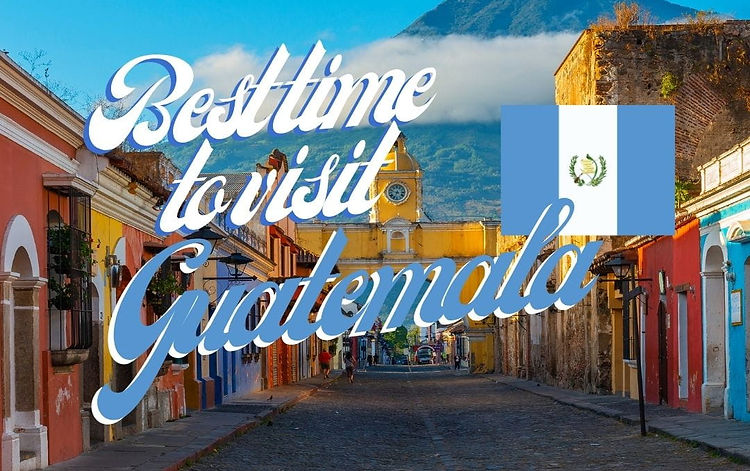
Best time to visit Guatemala
Guatemala, often referred to as the 'Land of Eternal Spring,' is a destination that enchants its visitors with a dramatic geography of smoking volcanoes, emerald-green lakes, and mystical jungles. The question of the perfect time to visit cannot be answered with a single date, as the climate in this Central American gem is determined less by classic seasons and more by vast differences in altitude and the transition between the dry and rainy seasons. While you might wander among Maya ruins in the tropical heat of the Petén lowlands, you could find yourself shivering under a crystal-clear, cool starry sky in the highlands of Antigua.
Table of Contents:
The Dance of the Azure Sky
The classic golden era for travelers begins in November and extends through April. During this period, known as the dry season or “Verano,” Guatemala shows its most radiant side as the heavy clouds of previous months vanish almost completely from the deep blue firmament. It is the time when the paths to the remote temples of Tikal are firm and accessible, and volcanic peaks like Acatenango present their imposing silhouettes without a veil of clouds. This is the ideal phase, particularly for hikers and photographers, as the visibility in the highlands is breathtaking and the humidity drops to a comfortable level, making the exploration of Antigua's cobblestone streets a true pleasure.

The Awakening of the Emerald World
When May arrives, nature begins its most spectacular regeneration program as the rainy season—the "Invierno"—kisses the parched earth awake. Although many travelers fear the rain, the period through October offers its own unique, almost meditative magic, as the landscapes glow in an almost unreal, intense green.
The rainfall usually follows a reliable rhythm: mornings are often sunny and clear, while in the afternoon, the sky opens up for an hour or two to wash away the day's heat in a powerful tropical downpour. Those who don't shy away from the humidity will be rewarded with lower prices, fewer crowds at the sights, and a flora that stands in its full, lush splendor.
In the Land of Eternal Spring
The central highlands, with the majestic Lake Atitlán and the colonial city of Antigua, are the country’s climatic heart. Here, the thermometer usually hovers between a mild 20°C and 25°C year-round. You truly experience the sensation of an eternal spring, though one should not underestimate the treacherous chill of the nights—especially in December and January, when temperatures in the mountains can drop significantly.
This period is particularly enchanting; with the rainy season having just ended, the air is clean and dust-free, making the view across the lake toward the three striking volcanoes—San Pedro, Tolimán, and Atitlán—appear exceptionally sharp and full of contrast.

The Ember of the Past Gods
In the deep north, where the towering ruins of Tikal rise from the dense canopy, a completely different climate prevails—one defined by tropical humidity and constant heat. Here, there is no true cooling down, only variations ranging from "hot" to "extremely hot," with the months of March and April often reaching the most intense temperatures, frequently climbing above 35°C. In this region, the dry season is almost vital for adventurers wishing to push deeper into the jungle, as unpaved roads can quickly transform into impassable mud tracks during the rainy season. A visit at dawn, when mist still lingers between the temples and howler monkeys greet the day, remains a mystical experience year-round, though it requires a good level of fitness to withstand the hot and humid climate.
Where the Ocean Kisses the Horizon
Along the coasts of Guatemala—both on the black sands of the Pacific and the Caribbean shores near Livingston—a climate of extremes prevails, attracting sun seekers and surfers alike. The Pacific coast is characterized by sweltering heat nearly year-round, with the months from November to April offering the most stable conditions for beach days and sea turtle watching.
On the Caribbean coast, however, it rains significantly more often than in the rest of the country, even during the official dry season; yet, this does nothing to dampen the tropical laid-back vibe of the Garifuna culture. Those traveling here should prepare for high humidity, which is nevertheless softened by the steady ocean breeze and the warm waters of the Gulf of Honduras.

A Festival of Colors and Contrasts
Aside from the weather, cultural highlights play a decisive role in choosing the best time to travel, with Holy Week—"Semana Santa"—in Antigua undoubtedly representing the absolute pinnacle. During this time, usually in March or April, the city transforms into a sea of color as miles of carpets made of dyed sawdust and blossoms adorn the streets; however, this also means that accommodations must be booked months in advance.
Another magical moment occurs in November, when massive, colorful kites soar into the sky over Sumpango for the Day of the Dead to greet the spirits of the ancestors—an event that celebrates the transition into the dry season in perhaps the most spectacular way imaginable.

Best time to visit Guatemala: Key points
The optimal time to travel to Guatemala depends on various factors, including the climate, the peak tourist season, and your planned activities. Here is a summary of the most important information:
General Best Time to Travel
Dry Season (November to April):
This is generally considered the best time for a trip to Guatemala.
The weather during this period is dry and pleasant, with plenty of sunshine.
This period also coincides with the peak tourist season.
It is an excellent time to visit the coasts, Guatemala City, Antigua, the famous Mayan ruins of Tikal, the tropical rainforest, or for volcano trekking in the highlands.
Rainy Season (May to October)
During the rainy season, heavy rainfall can occur, especially in the afternoon.
These rains can lead to flooding, landslides, and impassable roads.
Tropical storms or hurricanes can also occur during this time.
Regional Differences
Coasts: It is warm to hot year-round with high humidity. The most pleasant time to visit the coasts is during the dry season (November to April).
Highlands: Temperatures in the highlands can be cooler, especially at night. July and August are well-suited for high-altitude mountain regions.
Lake Atitlán: The dry season from November to April is the best time to visit Lake Atitlán.
Additional Considerations
Popular sights can be crowded during the peak tourist season.
Easter Week (Semana Santa) is a particularly popular time to visit, as impressive processions take place throughout Guatemala.
It is important to note that the climate in Guatemala can vary depending on the region and altitude.
I hope this information helps you with planning your trip to Guatemala!

Climate table for Guatemala
Guatemala, the 'land of eternal spring,' has very diverse climate zones due to its topography. The following table refers to Guatemala City, which is located in the central highlands and is representative of the most popular travel destinations such as Antigua or Lake Atitlán.
Month | Avg High °F | Avg Low °F | Rainfall (inches) |
January | 72 | 54 | 0.2 |
February | 75 | 55 | 0.2 |
March | 77 | 57 | 0.3 |
April | 79 | 59 | 1.4 |
May | 78 | 60 | 5.7 |
June | 75 | 60 | 7.1 |
July | 75 | 59 | 6.2 |
August | 75 | 59 | 6.9 |
September | 74 | 59 | 10.3 |
October | 73 | 58 | 5.3 |
November | 72 | 56 | 0.8 |
December | 72 | 55 | 0.3 |
Regional Differences
The weather in Guatemala can be roughly divided into three zones:
Tierra Caliente (up to 3,280 ft): Coastal regions (Pacific & Caribbean) and the north (Petén/Tikal). It is hot (86–95°F) and humid here year-round.
Tierra Templada (3,280 – 6,560 ft): The central highlands (Antigua, Guatemala City). Mostly 72–81°F during the day, cooling down to approx. 54–59°F at night.
Tierra Fría (above 6,560 ft): In regions like Quetzaltenango, there can even be frost at night during the winter (December/January).
Travel Season Check
Dry Season (Verano): November to April. This is the best time to travel. The sky is usually steel blue, and roads to remote areas are easily passable.
Rainy Season (Invierno): May to October. It usually doesn't rain all day, but rather in the form of heavy showers in the afternoon or evening. The landscape is particularly lush and green during this time.
Special Feature "Canícula": In July/August, there is often a two- to three-week break in the rainy season with plenty of sunshine.
Quick Tip: Even though Verano means "summer" and Invierno means "winter" in Spanish, Guatemalans use these terms to refer to the dry and rainy seasons respectively, regardless of the actual astronomical season.

Why visit Guatemala?
Guatemala is a fascinating travel destination that welcomes visitors with a rare blend of vibrant indigenous culture and breathtaking natural landscapes. The country is considered the heart of the Maya world, a fact reflected not only in the massive ruins of Tikal set deep within the dense jungle but also in the daily lives of the people, who proudly preserve their traditions and colorful attire to this day. Those who travel here immerse themselves in a world that feels equally mystical and authentic.
Between Volcanoes and Colonial Charm
Particularly defining for the travel experience is the country's dramatic geography, dominated by majestic volcanoes. While adventure seekers climb the smoking peaks, Lake Atitlán, surrounded by crater walls, offers a sight of almost surreal beauty. A peaceful contrast to this is the former capital, Antigua, whose cobblestone streets and magnificent Baroque buildings breathe the spirit of the colonial era. In this way, Guatemala combines adventure in untouched wilderness with deep insights into a millennia-old history and the warmth of a hospitable population within a remarkably small area.

What are the must-see sights in Guatemala?
Guatemala is an absolute gem in Central America—a blend of mystical Mayan ruins, colonial charm, and nature that feels almost surreal.
Here are the highlights that shouldn't be missing from any list:
🏛️ Tikal: The Heart of the Mayan World
In the middle of the dense jungle of Petén, massive limestone pyramids tower above the canopy. Tikal was one of the most significant cities of the Mayan civilization.
Pro Tip: Go for the "Sunrise Tour." When the jungle wakes up and the howler monkeys start their roar while the mist hangs over the temples, it’s pure goosebumps.
You can find and book tours to Tikal here!*
🌋 Antigua Guatemala: Colonial Beauty
This city is a UNESCO World Heritage site and arguably one of the most beautiful places in Latin America. Cobblestone streets, pastel-colored houses, and church ruins scarred by earthquakes.
Highlight: The view of the Agua Volcano at the end of the famous arch street (Santa Catalina Arch).
🛶 Lake Atitlán: The Most Beautiful Lake in the World
Aldous Huxley called it the most beautiful lake in the world, and he was right. The lake sits in a massive volcanic crater and is surrounded by three majestic volcanoes.
The Villages: Every village on the shore has its own vibe—from yoga retreats in San Marcos to the lively backpacker hub of San Pedro.
Find your excursion or a tour to the lake here!*
💧 Semuc Champey: Turquoise Paradise
Hidden in the middle of nowhere is a 300-meter-long natural limestone bridge, topped with tiered, turquoise pools. Beneath it, the Cahabón River flows through a cave.
Activity: Swim, relax, and take the hike to "El Mirador" for the perfect postcard photo.
You can find and book tours here!*
🥾 Acatenango Volcano: The Ultimate Adventure
Not for the faint of heart, but unforgettable. You hike to the summit of Acatenango to watch the neighboring Fuego Volcano, which spews lava almost every 15–20 minutes.
Experience: Lying in your tent at night, hearing the rumble and seeing the glow of the eruptions.
You can find and book tours to the volcano here!*
🥗 A Little Culinary Detour
While you're there, you must try Pepián—a traditional meat stew with a rich, spicy sauce made from roasted seeds and chilies. It is considered the national dish of Guatemala.

When to travel to Guatemala?
The ideal time to travel to Guatemala is during the dry season between November and April, as you can expect brilliant blue skies and plenty of sunshine during these months. Especially for hiking the majestic volcanoes or exploring the Mayan ruins in the jungles of Tikal, these months offer the most stable conditions; meanwhile, the rainy season from May to October often brings heavy afternoon showers and higher humidity.
Regional Differences and Cultural Highlights
Despite the clear division of seasons, Guatemala is known as the 'Land of Eternal Spring' and can be visited year-round. However, in the highlands—such as Antigua or Lake Atitlán—you should always prepare for warm days and cool nights.
Those wishing to witness the impressive Easter processions in Antigua should plan their visit for Holy Week (Semana Santa), though they must expect significantly higher prices and fully booked accommodations. In contrast, the lower-lying regions in the north and along the coasts remain tropically hot throughout the year, with the months of February to April being the most pleasant for outdoor activities.

Official Guatemala Tourism Websites
Guatemala is a fantastic choice for 2026, especially as it leans heavily into sustainable and "regenerative" tourism. Whether you are looking for the official government word or boots-on-the-ground advice, here are the most reliable resources to help you plan.
🏛️ Official Tourism & Government Sites
These are your best bets for official travel requirements, safety updates, and registered tour operators.
Visit Guatemala (INGUAT): The official national tourism board. This site is the primary resource for exploring different regions (Highlands, Petén, Pacific Coast) and finding certified guides.
Pro Tip: Look for the "Pacto por un Atitlán Transparente" updates if you're visiting Lake Atitlán, as there are new sustainability initiatives for 2026.
INGUAT (Official Institutional Site): While more administrative, this is where you can find the "Sichere Taxis" (Safe Taxis) program info and contact numbers like 1500 (tourism assistance).
CONRED: This is the disaster coordination agency. Since Guatemala has active volcanoes (Fuego, Pacaya, Santiaguito), check here for real-time activity reports before planning a hike.
✍️ Highly Rated Travel Blogs & Guides (2026 Updated)
These blogs offer more "real world" advice, budget breakdowns, and hidden gems that official sites might miss.
The Broke Backpacker - Guatemala Guide: Recently updated for 2026, this is arguably the best resource for route planning, hostel recommendations (like Socialtel in Atitlán), and daily budget estimates.
Enjoy Guatemala Blog: Great for deep dives into specific cities like Antigua. They have a fresh "What’s New in 2026" guide that highlights new eco-lodges and the best third-wave coffee shops (check out Alegría Café).
Tikal Go: If you are heading north to the Petén jungle to see Maya ruins, this blog is excellent for logistics regarding Tikal, Uaxactún, and sustainable jungle trekking.
National Geographic - Guatemala: Ideal for those interested in the cultural and historical side, featuring long-form articles on Maya artisans and indigenous-led tours.
💡 Quick Tips for 2026 Travelers
Semana Santa (Holy Week): In 2026, this falls between March 22 – March 29. If you plan to be in Antigua for the famous flower carpets, you should book your accommodation at least 6–10 months in advance, as prices can triple.
Connectivity: Most travelers now use eSIMs (Airalo or Maya Mobile work well here) rather than hunting for physical SIM cards in Guatemala City.
Transport: The "Chicken Buses" are iconic but can be intense. For 2026, the network of tourist shuttles between Antigua, Lake Atitlán, and Lanquin (Semuc Champey) is more robust than ever and can be booked via most of the blogs listed above.

Entry requirements for Guatemala (USA & UK)
For travelers from the United States and the United Kingdom, Guatemala offers a relatively open door, though 2026 brings specific digital requirements that are strictly enforced at all ports of entry.
Visa Exemptions and Stay Duration
Citizens of the USA and the UK do not require a tourist visa to enter Guatemala for stays of up to 90 days. Guatemala is part of the Central America-4 (CA-4) Border Control Agreement, alongside El Salvador, Honduras, and Nicaragua. It is important to note that the 90-day limit applies to the total time spent across all four countries combined, rather than 90 days per nation. If you plan to stay longer, you must apply for an extension through the General Directorate of Migration in Guatemala City or briefly exit the CA-4 region.
Passport and Documentation Standards
Your passport must be valid for at least six months from the date of your arrival in Guatemala. Additionally, immigration officials require that your passport has at least two blank pages for entry and exit stamps. While travelers are often admitted without extensive questioning, you should be prepared to show proof of a return or onward ticket and evidence of sufficient funds—typically around 50 USD per day—to cover your expenses during the trip.
Mandatory Digital Declaration
As of 2026, all travelers must complete the Electronic Regional Traveler’s Affidavit (Declaración Jurada Regional de Viajero) before arriving at the border or airport. This digital form replaces the old paper customs cards and generates a QR code that must be presented to authorities. It is highly recommended to complete this form at least 24 hours before departure and keep a digital or printed copy of the confirmation email to avoid significant delays upon landing at La Aurora International Airport.
Customs and Prohibited Items
Guatemala maintains a "Traffic Light" system for baggage inspections, where a green light allows you to pass and a red light triggers a manual search. Travelers are permitted to bring one laptop and one mobile device for personal use; bringing multiple high-value electronics can sometimes lead to "commercial import" accusations and immediate tax assessments. The importation of fresh produce, meat, and dairy products is strictly prohibited to protect local agriculture, and any currency exceeding the equivalent of 10,000 USD must be formally declared to avoid confiscation.
Entry and Departure Fees
While there is no entry fee for US or UK tourists at official airports, those entering via land borders should be wary of unofficial "fees" requested by individuals; official immigration processing is generally free of charge. Most international airfares already include the 30 USD airport departure tax. However, if you are traveling on certain smaller regional airlines or exiting via land, you may be required to pay a small security or municipality fee in local Quetzales.
Official Sources and Government Agencies
To ensure your travel plans are based on the most reliable information, you should always consult official government channels. These agencies provide the most current data on entry rules, safety advisories, and health requirements.
U.S. State Department Travel Advisory: travel.state.gov/guatemala
U.S. Embassy in Guatemala City: gt.usembassy.gov
FCDO Travel Advice (UK): gov.uk/foreign-travel-advice/guatemala
TravelHealthPro (Health Specifics): travelhealthpro.org.uk/country/94/guatemala
Guatemalan Institute of Migration (Migración): igm.gob.gt

Payment and Mobility in Guatemala
Navigating Guatemala requires a mix of modern preparation and old-school flexibility. While the country is modernizing quickly, it remains a heavily cash-dependent society once you step outside the major urban hubs.
Currency and Credit Cards
The official currency is the Guatemalan Quetzal (GTQ), often symbolized simply as Q. While US Dollars are occasionally accepted in high-end hotels or for major tours, you will receive a poor exchange rate, so it is essential to carry local cash. In 2026, credit cards (primarily Visa and Mastercard) are widely accepted in "Tier 1" locations like Guatemala City, Antigua, and luxury lakefront hotels in Panajachel. However, smaller "tiendas," market stalls, and rural guesthouses are strictly cash-only. Be aware that many local businesses add a surcharge of 5% to 8% for card payments to cover processing fees. For cash withdrawals, look for 5B (yellow) or BAC (red/white) ATMs, which are the most reliable, though they typically have a per-transaction limit of around Q2,000 to Q3,000.
Public Transportation
Public transport in Guatemala is an experience in itself, ranging from the iconic to the practical. The famous "Chicken Buses" (retired North American school buses) are the cheapest way to get around and cover almost every corner of the country. While authentic, they are often crowded, and safety can be a concern due to aggressive driving and occasional petty theft; they are best used for short daytime trips. For longer distances between tourist hubs (e.g., Antigua to Lanquín or Panajachel), shared tourist shuttles (minivans) are the standard choice for travelers. They are safer, offer door-to-door service, and can be booked through any local travel agency. Within Guatemala City and Antigua, Uber is highly recommended as a safer and more transparent alternative to street taxis.
Rental Cars and Driving
Renting a car offers the most freedom, especially for visiting remote areas like the Verapaces or the Pacific coast, but it requires caution. You generally need a valid driver’s license from your home country, a passport, and a major credit card for the security deposit (debit cards are rarely accepted for the hold).
Road Conditions: While main highways like the CA-1 are paved, secondary roads are often riddled with potholes or may be unpaved, making a 4WD or high-clearance vehicle a wise investment.
Safety: It is a golden rule in Guatemala never to drive at night due to poorly lit roads, wandering livestock, and increased security risks.
Navigation: Use apps like Waze (which is very popular locally) to stay updated on frequent roadblocks or construction delays.
Find your rental car in Guatemala on QEEQ.com!*

Internet in Guatemala
Yesim is a popular choice for travelers who want to avoid expensive roaming fees or the hassle of searching for local SIM cards on-site. Here is a compact summary of the essentials:
Key Advantages
Ready to use instantly: You download the app, buy a data plan, and activate the eSIM directly on your smartphone—no physical card swap required.
Cost transparency: You pay fixed prices for data packages (e.g., 1 GB, 3 GB, or unlimited plans). No nasty surprises on your mobile bill back home.
Flexibility: You can book plans for individual countries or entire regions (e.g., Europe, Asia).
Extra features: A VPN function is often included, increasing security in public Wi-Fi networks. Additionally, there is a reward system ("Ycoins") that allows you to collect discounts.
When is it especially worth it?
Outside the EU: In countries like the USA, Turkey, or Thailand, where traditional roaming is extremely expensive.
Short trips: When the effort of finding a local shop isn't worth it for just 3–4 days.
Security: You have network access immediately upon landing and don't have to rely on insecure airport Wi-Fi.
Important Note
Your smartphone must be eSIM-compatible and cannot have a SIM lock. Most devices manufactured from 2019 onwards (iPhone 11, Google Pixel 3, Samsung S20, and newer) support this without any issues.
Put an end to expensive roaming fees and enjoy Guatemala at full speed. 👉 Get Yesim for Guatemala now and go online instantly!*

Travel Health Insurance for Guatemala
Travel health insurance is not legally mandatory for entry into Guatemala in 2026, but it is strongly recommended due to the high costs of private medical care and the potential for volcanic activity or tropical illnesses.
Essential Coverage for Guatemala
When choosing a plan for Guatemala, ensure it includes medical evacuation and repatriation, as high-quality medical facilities are often concentrated in Guatemala City and may require air transport from remote areas like Tikal or Lake Atitlán. Your policy should ideally cover at least $50,000 to $100,000 in medical expenses. Additionally, since the country is a hub for hiking and adventure, verify that your insurance covers "hazardous activities" if you plan on climbing volcanoes like Acatenango.

The Auras Insurance Option
Auras is a digital-first insurance provider known for its flexible, modular approach. It is particularly popular for its "Already Traveling" feature, which allows you to purchase a policy even if you have already left your home country (with a 48-hour waiting period).
Customizable Tiers: You can choose between "Calm" (sightseeing), "Active" (trekking/surfing), or "Extreme" (ziplining/high-risk sports) to match your itinerary.
Key Features: They offer coverage limits ranging from $35,000 to $1,000,000, with options to add specific riders for luggage loss, flight delays, and even alcohol-related incidents—a rarity in many standard travel policies.
Costs:
This type of travel health insurance is very affordable. For a single trip, you often pay just a few dollars. For comprehensive worldwide travel health insurance, I recommend our partner AURAS*. It can be completed online in just a few steps, and with our code "WRTY100487", you will receive an additional 10% discount on your policy.
You can find and book activities in Guatemala here:
You can find flights to Guatemala here:
States in the USA

Best time to visit the USA
Here is all the information you need about the best time to visit the USA! Everything that matters, all on one page!

Best time to visit Panama
Here you will find all the information about the best time to visit Panama! Everything you need to know, all on one page!

Best time to visit Nicaragua
Here you will find all the information regarding the best time to visit Nicaragua! Everything you need to know, all on one page!

Best time to visit Mexico
Here you will find all the information about the best time to visit Mexico! Everything you need to know, all on one page!

Best time to visit Canada
Here you will find all the information regarding the best time to visit Canada! Everything you need to know, all on one page!

Best time to visit Honduras
Find all the information you need regarding the best time to visit Honduras right here! Everything that matters, all on one page!

Best time to visit Guatemala
Here you will find all the information about the best time to visit Guatemala! Everything you need to know, all on one page!

Best time to visit El Salvador
Here you will find all the information about the best time to visit El Salvador! Everything you need to know, all on one page!

Best time to visit Costa Rica
Here you’ll find everything you need to know about the best time to visit Costa Rica! All the essential info, all on one page!

Best time to visit Belize
Here you will find all the information about the best time to visit Belize! Everything you need to know, all on one page!
Check out my YouTube channel here:
Recent Blog Posts:


