

Best time to visit Diekirch

Updated: Jun 6
Here is everything you need to know for your perfect holiday in Diekirch, Luxembourg. Also, check out my video from Diekirch—you can find it right below this post!

Table of Contents:
Best Time to Visit Diekirch: When a Holiday in Luxembourg’s North is Truly Worth It
If you are planning a trip to the charming north of Luxembourg, the question of perfect timing quickly arises. The Sûre region has its very own appeal at any time of year. However, whether you want to go hiking, experience culture, or simply enjoy some peace and quiet, the best time to visit Diekirch varies considerably. The temperate Central European climate ensures that the city is accessible year-round, but the weather significantly influences which activities will be the most enjoyable.
Nature's Awakening in Spring
Starting in April, the region shakes off the winter chill, and the Sûre Valley begins to shine in fresh green. Spring is considered an absolute insider tip and, for many active travelers, the best time to visit Diekirch. With mostly mild degrees, the temperatures are ideal for tackling challenging hiking trails like the famous Lee Trail without breaking a sweat. Since the large crowds of tourists have not yet arrived, you often have the historic alleys of the old town and the riverside promenade almost to yourself—even though you should certainly still expect a rain shower or two in April.

☀️ Vibrant Atmosphere and Summer Sunshine
The summer months from June to August bring the warmest days of the year and transform Diekirch into a vibrant hub for outdoor enthusiasts. For sun worshipers, water sports lovers, and families, this is undoubtedly the best time of year to visit Diekirch. The Sauer River now invites you to enjoy extended tours in a kayak or canoe, and the cafés as well as the shady beer gardens in the pedestrian zone are bustling well into the evening hours. Additionally, the city pulses during this time with various open-air events and concerts, ensuring that culture lovers get their full money's worth.
🍂 Golden Autumn Colors
When September reaches the land, temperatures slowly begin to cool, yet nature pulls out all the stops one last time. Autumn transforms the dense forests around the city into a spectacular sea of gold, red, and brown tones. Anyone wishing to experience the landscape in its most photogenic splendor will find September and October to be the personally best time to travel to Diekirch. It is the season of regional harvest festivals and culinary specialties, a time when traditional, hearty Luxembourgish cuisine tastes especially good after a long autumn hike.
❄️ Contemplative Silence in Winter
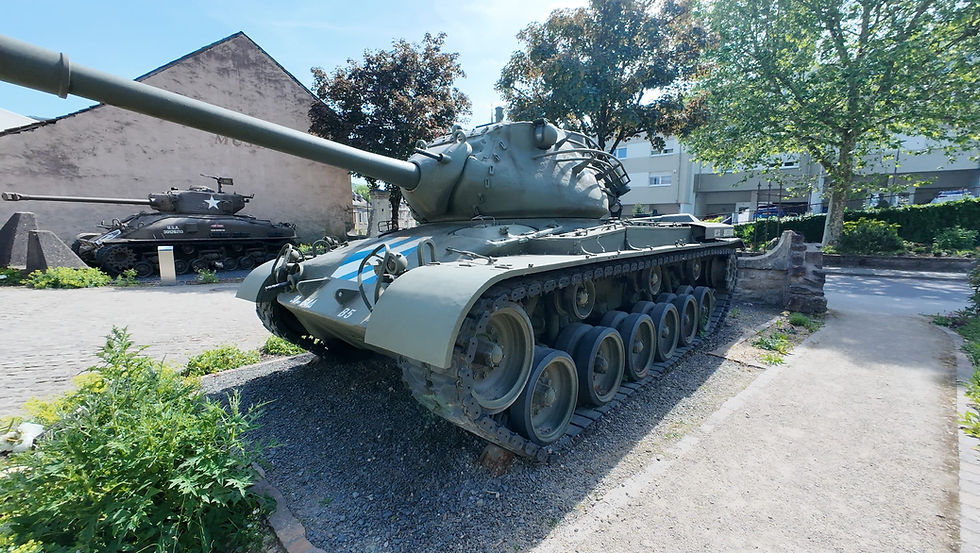
With the arrival of winter, a deep, almost magical calm settles over the city. The winter months from November to February reveal a completely different, slower side of the region. Even though the weather is now often cold and wet, with occasional snow dusting the hills, this season holds its own special appeal. A visit to the world-renowned military museum or the vintage car museum can now be wonderfully paired with cozy hours spent over a hot drink in one of the traditional cafés. When the Christmas markets light up the region in December, the town exudes a very special, intimate charm.
The Best Time to Visit Diekirch – A Conclusion
In summary, there is no single, universal "best time" to visit Diekirch, as every season has its very own charm. However, if you are looking for the full experience of hiking, water sports, and vibrant culture, the months from May to September are your best bet. During this period, the city shows its warmest and most welcoming side, making a stay in the heart of Luxembourg a truly unforgettable experience.

Climate Table Diekirch
The climate in Diekirch is Central European-temperate. However, due to its location on the edge of the Ardennes (Éislek), it is noticeably cooler and wetter than the southern part of Luxembourg. Summers are pleasantly warm (rarely extremely hot), while winters are crisp, cold, and often overcast.
Here is the overview of the average climate values throughout the year:
Month | Avg. Max. Temp | Avg. Min. Temp | Rainy Days / Rainfall |
January | 3 °C / 37 °F | -1 °C / 30 °F | approx. 11 days |
February | 5 °C / 41 °F | -1 °C / 30 °F | approx. 8 days |
March | 9 °C / 48 °F | 1 °C / 34 °F | approx. 7 days |
April | 13 °C / 55 °F | 4 °C / 39 °F | approx. 7 days |
May | 16 °C / 61 °F | 7 °C / 45 °F | approx. 8 days |
June | 20 °C / 68 °F | 11 °C / 52 °F | approx. 8 days (most rainfall) |
July | 22 °C / 72 °F | 13 °C / 55 °F | approx. 8 days |
August | 22 °C / 72 °F | 13 °C / 55 °F | approx. 7 days |
September | 18 °C / 64 °F | 10 °C / 50 °F | approx. 6 days (driest month) |
October | 13 °C / 55 °F | 7 °C / 45 °F | approx. 7 days |
November | 8 °C / 46 °F | 3 °C / 37 °F | approx. 8 days |
December | 4 °C / 39 °F | 0 °C / 32 °F | approx. 11 days |
Key Insights for Your Travel Planning
Precipitation Throughout the Year: Rainfall in Diekirch is distributed fairly evenly all year round. Surprisingly, June statistically brings the highest amount of rainfall (approx. 60 mm), though this usually discharges in heavy summer thunderstorms with plenty of sunshine in between. March and September tend to be the driest months.
Best Time to Visit: For outdoor activities like hiking on the Lee Trail or canoeing on the Sûre (Sauer) River, the best window is between May and September. Statistically, July is the warmest and sunniest month.
The "Ardennes Effect": Due to the hilly landscape surrounding Diekirch, the sky often becomes completely overcast for days at a time in autumn and winter (from October to March). If you want to see the vibrant autumn foliage, keep a close eye on the weather forecast to catch the clear days.

Why Travel to Diekirch?
Diekirch is a charming corner of the world in northeastern Luxembourg that radiates a very special sense of tranquility. Nestled in the picturesque Sauer Valley, the town harmoniously combines untouched nature with deeply rooted history. Visitors come here to leave everyday stress behind, immersing themselves in a landscape shaped by wooded hills, gentle river courses, and historic architecture. The pedestrian zone, with its cozy cafes, invites you to linger, while the town’s time-honored beer culture and its ubiquitous mascot—the donkey—lend the place a humorous and welcoming character.
Where History Comes Alive and Nature Sets the Pace
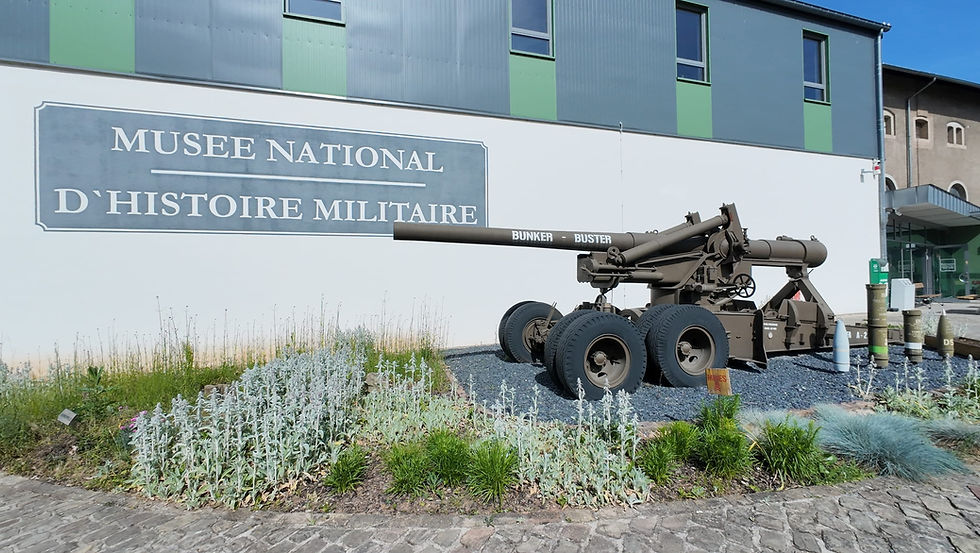
The true magic of Diekirch unfolds in the sheer versatility it offers to travelers. History buffs will find one of the most impressive collections on the Battle of the Bulge at the National Museum of Military History, which brings the past to life in a gripping way. At the same time, active travelers and those seeking relaxation are magnetically drawn to the Sauer River. The river and its surrounding routes, such as the famous Lee Trail, offer spectacular views and ideal conditions for long hikes, cycling tours, or relaxed afternoons in a kayak. In Diekirch, culture and nature seamlessly intertwine, ensuring that every day offers a balanced mix of discovery and deep relaxation.
What should you see in Diekirch?
Here are the absolute highlights that you shouldn't miss during a visit to Diekirch. The town is compact, so you can easily explore almost everything on foot.
National Museum of Military History (MNHM)
This museum is one of the most significant of its kind in Europe. The main focus is on the Battle of the Bulge during the winter of 1944/1945. With life-sized, highly detailed dioramas, historic tanks, vehicles, and personal items belonging to the soldiers, history is brought to life here in an incredibly gripping and emotionally moving way.
The Donkey Fountain & the Historic Old Town
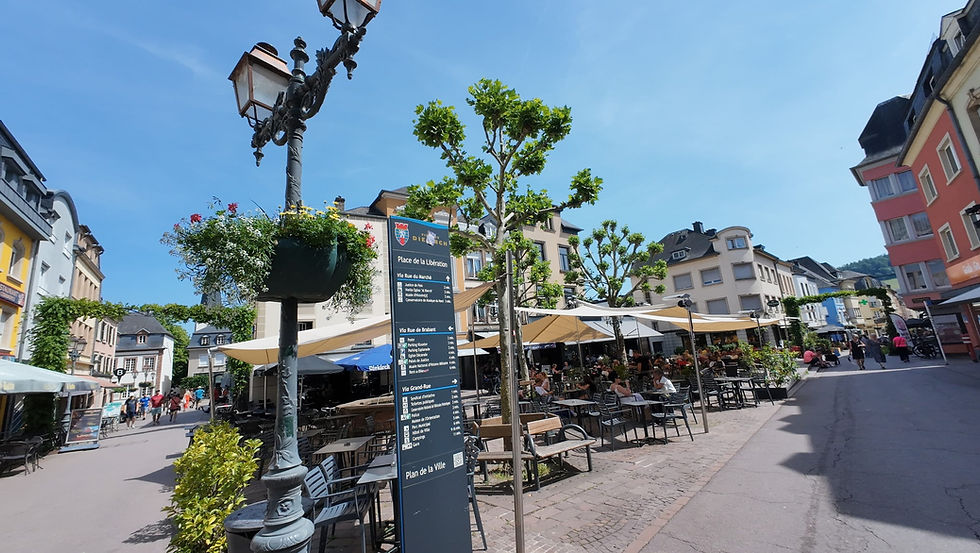
The donkey is the official mascot of Diekirch. You will encounter it everywhere throughout the charming pedestrian zone. The centerpiece is the Donkey Fountain (Moerebrunnen) on the market square. By the way, during special public festivals, it's not water that flows from the fountain, but the famous Diekirch beer! The surrounding alleys are perfect for strolling and enjoying a coffee.
⛪ The Old St. Lawrence Church
A true hidden gem for culture enthusiasts. The Old St. Lawrence Church (Al Kierch) is built on the foundations of a monumental 4th-century Roman villa. Inside, you can admire fascinating archaeological excavations and beautiful, centuries-old frescoes. It is considered one of the oldest churches in the country.
🌊 The Sauer Promenade & Nature
If you are looking for some relaxation, the promenade along the River Sauer is ideal. It is a popular meeting spot for walkers, cyclists, and anglers. In the summer, you can rent a kayak or canoe and let the town drift past you from the water. Access to spectacular hiking trails, such as the Lee Trail, also begins right in the region.
🚗 National Museum of Historical Vehicles
Located right next to the military museum, this is a treat for car enthusiasts. This museum showcases a lovingly curated collection of vintage cars, historic motorcycles, and means of transport from various eras. It offers a great insight into the history of mobility over the past century.

When to visit Diekirch?
Diekirch is worth a visit at any time of year, but the ideal window for the perfect holiday in northern Luxembourg is clearly between late spring and early autumn. From May to September, this charming town on the Sauer River shows its most vibrant side. During this period, the weather is pleasantly mild and stable, offering optimal conditions for extensive hikes through the surrounding forests or paddling tours on the river. In addition, local cultural life comes alive during this time, with many traditional festivals and open-air events breathing life into the historic alleys.
Nature experiences in summer and golden moments in autumn
Those wishing to use the region primarily for outdoor activities will find the best conditions in midsummer to explore the shaded valleys of the Luxembourg Ardennes. From October onwards, the landscape transforms and attracts mainly those seeking peace and quiet, as the region's foliage turns colorful and the wine harvest on the nearby Moselle provides culinary highlights. For culture enthusiasts who want to visit the famous museums—such as the National Museum of Military History—in peace, the quieter and cooler months of early spring are also ideal for escaping the crowds of tourists.

Official tourism websites of Diekirch
Here is a curated list of official tourism resources and helpful travel blogs to help you plan your visit to Diekirch, Luxembourg.
Official Tourism Websites
The official portals are your best bet for accurate, up-to-date regional information, events calendars, and public transport guides.
Visit Diekirch (Official Tourist Office)
This is the dedicated local tourism site run by the Syndicat d’Initiative Diekirch. It offers direct information on accommodations, restaurants, local hiking trails, and events (like the annual Eselfest celebrating the city's donkey mascot).
Physical Address: 3, place de la Libération, L-9255 Diekirch
Visit Éislek (Regional Tourism)
Diekirch is located in the Éislek region (the Luxembourg Ardennes). This regional site is excellent for broader outdoor activities, locating nature discovery parks, and understanding the regional geography.
Visit Luxembourg (National Portal)
The official national tourism website. It features a great breakdown of major local attractions like the National Museum of Military History (superb Battle of the Bulge exhibits) and the National Conservatory of Historic Vehicles.
Useful Travel Blogs & Guides
If you are looking for personal experiences, practical itineraries, and a local perspective on what to expect, these blogs are highly recommended:
Reizen & Reistips (Travel & Travel Tips)
An excellent independent blog focusing on off-the-beaten-path destinations. Their specific Diekirch guide offers a deep dive into the city's history, detailing the legend of why Diekirch is called the "Donkey City," mapping out the Roman mosaic remnants, and highlighting the best streets in the old pedestrian zone for a local beer.
A cross-border collaborative travel blog covering the Ardennes region. It features experiential storytelling, including a great first-hand review of what it is actually like to explore Diekirch's military history museums and nearby outdoor spots.
Outdoor Travel (Video Walkthrough Guide)
While technically a video blog format, this channel provides a practical visual walkthrough of a perfect day in Diekirch, mapping timestamps from the Sauer River embankment to the specific local brewery museums.
Planning Tip: Remember that all public transport throughout the entire country of Luxembourg—including trains and buses connecting Luxembourg City to Diekirch—is entirely free of charge for both locals and tourists.
Entry requirements for Diekirch (Luxembourg)
United States and United Kingdom citizens traveling to Diekirch must comply with the standard entry regulations for the Schengen Area, as Luxembourg is a member state. Your passport must have a date of issue that is less than ten years old on the day you enter the country. Additionally, the document must remain valid for at least three months beyond your intended date of departure from the Schengen zone. It is also required that your passport has at least two blank pages for administrative use at the border.
Visa Exemptions and Stay Limits
Both US and UK passport holders enjoy visa-exempt status for short-term visits to Luxembourg. You do not need to apply for a visa in advance if your travel is for tourism, business meetings, or short-term study. However, you are strictly permitted to stay for a maximum of 90 days within any 180-day period. This 90-day allotment applies across the entire Schengen Area collectively, meaning days spent in neighboring countries like Belgium, France, or Germany count toward your total limit. Overstaying this period can result in fines and potential travel bans.
Electronic Entry and Exit Systems
European border authorities utilize the digital Entry/Exit System to register non-European Union travelers. When you pass through border control to enter the country, you will have your biometric data collected, which includes a facial image and digital fingerprints. This system replaces the traditional method of physical passport stamping and tracks your precise dates of entry and exit electronically.
Furthermore, the European Travel Information and Authorization System is scheduled for implementation. Once fully operational, visa-exempt travelers from both the US and the UK will be required to complete an online application and obtain an electronic travel authorization prior to boarding their flight or entering the Schengen region.

Additional Border Documents
While a visa is not required, border officials in Luxembourg have the right to request supporting documentation upon your arrival. You should be prepared to present proof of a return or onward travel ticket to show you intend to leave the zone within the legal timeframe. You may also be asked to show proof of accommodation, such as a valid hotel booking confirmation or a formal invitation letter from a host. Finally, travelers must demonstrate they possess sufficient financial means to cover the duration of their stay and hold valid travel insurance that covers emergency medical expenses.
Currency Declarations
There are explicit regulations regarding the transportation of cash across the border. If you are entering or leaving Luxembourg carrying cash, travelers' checks, or equivalent monetary instruments valued at 10,000 Euros or more, you must submit a formal declaration to customs officials. Failure to declare these funds can lead to the seizure of the money and additional legal penalties. Additional Border Documents
While a visa is not required, border officials in Luxembourg have the right to request supporting documentation upon your arrival. You should be prepared to present proof of a return or onward travel ticket to show you intend to leave the zone within the legal timeframe. You may also be asked to show proof of accommodation, such as a valid hotel booking confirmation or a formal invitation letter from a host. Finally, travelers must demonstrate they possess sufficient financial means to cover the duration of their stay and hold valid travel insurance that covers emergency medical expenses.
Currency Declarations
There are explicit regulations regarding the transportation of cash across the border. If you are entering or leaving Luxembourg carrying cash, travelers' checks, or equivalent monetary instruments valued at 10,000 Euros or more, you must submit a formal declaration to customs officials. Failure to declare these funds can lead to the seizure of the money and additional legal penalties.
🌐 Official Sources and Government Agencies
To ensure your travel plans are based on the most reliable information, you should always consult official government channels. These agencies provide the most current data on entry rules, safety advisories, and health requirements.
Ministry of Foreign and European Affairs Luxembourg (Official Visa & Entry Info): mae.gouvernement.lu
U.S. State Department Travel Advisory: travel.state.gov/luxembourg
FCDO Travel Advice (UK): gov.uk/foreign-travel-advice/luxembourg
TravelHealthPro (Health Specifics): travelhealthpro.org.uk/country/134/luxembourg

Payment and Mobility in Diekirch
Navigating Diekirch—and Luxembourg as a whole—is incredibly stress-free, largely thanks to pioneering transport policies and high digital integration. Here is what you need to know about managing your money and getting around the city.
💶 Currency and Cash
As part of the Eurozone, Luxembourg uses the Euro (€).
While the country is overwhelmingly digital, carrying a small amount of cash (€20 to €50) is a smart backup for small bakeries, local market stalls, or purchasing a coin for a public locker. ATMs (locally called Bancomat) are widely available throughout Diekirch's town center, particularly around Place de la Libération.
💳 Credit and Debit Cards
Card payment is the absolute norm in Diekirch. Visa and Mastercard are accepted almost everywhere, from hotels and museums to local brasseries and cafes.
Contactless Payment: Apple Pay, Google Pay, and contactless debit/credit cards are ubiquitous. You can easily buy a coffee or pay for dinner with a quick tap.
Card Types: Traditional "chip and PIN" is standard. If you are using a US credit card that defaults to chip-and-signature, it will work in staffed establishments, but you might face issues at unmanned petrol pumps or ticket kiosks.
Foreign Transaction Fees: If you are a US or UK traveler, ensure your card provider doesn't charge extra for foreign transactions, as you will be using your card for virtually every purchase.
🚌 Public Transportation
This is where Luxembourg shines. All standard public transport across the entire Grand Duchy of Luxembourg is completely free of charge. This applies to everyone—residents, cross-border commuters, and tourists alike.
[Arrival] ──> [Board Bus, Train, or Tram] ──> [No Ticket Needed] ──> [Enjoy the Ride]
How it Works: You do not need to purchase a ticket, register online, or scan a pass. You simply walk onto the train, bus, or tram and sit down.
Diekirch Connections: Diekirch is highly accessible. You can take a direct train from Luxembourg City to Ettelbruck, and catch a seamless connecting train or a short bus ride straight into Diekirch.
The Only Exception: If you choose to travel First Class on the national railway (CFL), you must buy a ticket. Second class is entirely free.
Navigation Tool: Download the official Mobiliteit.lu app. It provides real-time schedules, platform numbers, and live route planning for all buses and trains servicing the Diekirch region.
🚗 Rental Cars
While public transport is exceptional, renting a car gives you the ultimate freedom to explore the winding roads, castle ruins, and deep valleys of the surrounding Éislek (Ardennes) region.
Where to Rent: Major international agencies like Avis have local rental offices operating right in Diekirch. However, for the widest selection of vehicles (especially automatic transmissions), booking your rental at Luxembourg Airport (LUX) upon arrival is highly recommended.
Driving Rules: Driving is on the right side of the road. Speed limits are strictly enforced via fixed speed cameras, typically set to 50 km/h in residential areas and 90 km/h on open country roads.
Fuel Policies: Most rentals use a "full-to-full" policy. Fuel prices in Luxembourg are government-regulated and historically lower than in neighboring France or Germany, making road trips relatively cost-effective.
Parking in Diekirch: Central Diekirch features automated parking zones. You will generally need to pay at a central machine (horodateur) using a card or coins and display the ticket on your dashboard, though many parking lots offer the first 15 to 30 minutes free.
🌐 Internet in Diekirch
Using Yesim for mobile data is a highly efficient way to stay connected in Diekirch. Luxembourg boasts near-complete 4G/5G coverage nationwide, ensuring your digital connection will be seamless even while navigating the northern Ardennes region.
Network Quality in Diekirch
Yesim operates on Tier-1 local infrastructure in Luxembourg, primarily partnering with major national networks like Orange Luxembourg and POST Luxembourg. Because Diekirch is a primary regional hub, you can expect unthrottled, ultra-fast 5G data throughout the town center, dropping down to stable 4G LTE only if you hike deep into the nearby rural valleys.
Available Yesim Plans
You can choose between two main plan structures directly inside the Yesim app depending on your usage style:
Standard Data Bundles: Fixed packages ranging from 1GB to 20GB, typically valid for up to 30 days. These are ideal if you just need internet for Google Maps, translation, and checking the Mobiliteit.lu transit schedules.
Unlimited Data Plans: Yesim offers unlimited data packages starting around $19 for 7 days. This is the best option if you plan to upload high-definition video, stream content, or tether your connection to a laptop or tablet via personal hotspot.
Activation & Deployment
Because Yesim is a 100% digital eSIM, you do not need to hunt down a local kiosk or purchase a physical SIM card at the airport.
Download App ──> Buy Luxembourg Plan ──> Scan QR Code ──> Activate on Arrival
Put an end to expensive roaming fees and enjoy Diekirch at full speed. 👉 Get Yesim for Diekirch now and go online instantly!*
Pro Tip: Download the Yesim app and install the profile on your device while you are still on your home Wi-Fi before departure. Once your flight lands in Luxembourg, simply toggle your device's cellular data line over to the Yesim profile and enable "Data Roaming" to connect instantly.

Travel health insurance for Diekirch
If you are looking for a highly digital, budget-friendly insurance option for your trip to Diekirch, AURAS Travel Insurance provides fully compliant coverage that meets all standard Schengen Area entry requirements.
Schengen Compliance & Coverage
Because Luxembourg requires non-EU tourists to hold valid travel medical insurance, AURAS is a straightforward fit. Its policies explicitly cover the mandatory €30,000 Schengen minimum for emergency medical treatment, outpatient and inpatient hospital care, and medical repatriation.
The Modular Plan System
Instead of a one-size-fits-all premium, AURAS uses an "intentional affordability" setup divided into activity Tiers. You only pay for what you actually plan to do around the Diekirch region:
Calm Plan: Ideal if your itinerary consists entirely of visiting local spots like the National Museum of Military History, walking the pedestrian zones, and light sightseeing.
Active Plan: Recommended if you want to take advantage of the Sauer River for kayaking or engage in moderate trekking through the Éislek hills.
Extreme Plan: Necessary if your trip includes higher-risk outdoor sports or specialized adventure activities.

Digital Management & Claims
AURAS operates as a 100% digital platform without physical branch offices. You can purchase a policy online in under a minute, and the PDF document is delivered to your email instantly—making it easy to show at border control if requested.
Important Claim Rule: If you require medical attention while in Diekirch, AURAS requires you to report the incident via their digital support channel within 24 hours. Except in life-threatening emergencies, you must contact them before receiving non-urgent treatment to ensure your out-of-pocket expenses are cleared for reimbursement.
Costs:
This type of travel health insurance is very affordable. For a single trip, you often pay just a few dollars. For comprehensive worldwide travel health insurance, I recommend our partner AURAS*. It can be completed online in just a few steps, and with our code "WRTY100487", you will receive an additional 10% discount on your policy.
You can find and book activities in Diekirch (Luxembourg) here:
Find your flights to Diekirch (Luxembourg City) here:
Here is my video from Diekirch:
Frequently Asked Questions (FAQ): Traveling to Diekirch
Are you planning a trip to the historic town of Diekirch in Luxembourg? Here is everything travelers from the US and the UK need to know before they go.
1. Where exactly is Diekirch, and how do I get there?
Diekirch is located in northeastern Luxembourg, along the Sauer River.
From the UK: The easiest route is flying into Luxembourg Airport (LUX) or taking the Eurostar to Brussels and transferring to a train to Luxembourg City. From the capital, frequent direct trains run to Diekirch (approx. 45 minutes).
From the US: You will likely fly into a major European hub (like Frankfurt, Paris, or Amsterdam) and take a connecting flight or train to Luxembourg.
2. Is public transport really free in Luxembourg?
Yes! Luxembourg is the first country in the world to make all public transport (trains, trams, and buses) completely free for both locals and tourists. You do not need a ticket to travel from Luxembourg City to Diekirch—just hop on the train.
Note: First-class train travel still requires a paid ticket, but standard second-class is 100% free.
3. Do I need a visa to visit Diekirch?
UK Citizens: You do not need a visa for stays up to 90 days out of any 180-day period. However, ensure your passport has at least 3 months of validity left.
US Citizens: No visa is required for tourist stays under 90 days. Note: Ensure your passport is valid for at least 3 months beyond your planned departure date.
4. What is the local currency, and can I use my credit card?
Luxembourg uses the Euro (€). Credit and debit cards (Visa and Mastercard) are widely accepted in hotels, restaurants, and shops in Diekirch. However, American Express is less commonly accepted. It is always smart to carry a little cash for small purchases at local markets or bakeries.
5. What language is spoken in Diekirch? Will I get by with English?
Luxembourg has three official languages: Luxembourgish, French, and German. However, English is widely spoken, especially in hotels, restaurants, and tourist attractions like the National Museum of Military History. You will have no problem getting around using English.
6. What are the must-see attractions in the town?
Diekirch is famous for two major things:
The National Museum of Military History (MNHM): A world-class museum known for its massive collection regarding the Battle of the Bulge during WWII.
Diekirch Beer: The town has a rich brewing history. Be sure to try a local Diekirch premium beer at a café in the pedestrian zone.
St. Laurence Church: One of the oldest churches in the country, built over ancient Roman ruins.
7. What power plugs are used in Diekirch?
Diekirch uses the standard European Type C and Type F plugs (230V, 50Hz).
UK travelers will need a standard UK-to-EU adapter.
US travelers will need a plug adapter and should check if their devices (like hair dryers or curling irons) are dual-voltage, as US voltage is lower (120V). Most modern laptops and phone chargers handle both voltages automatically.
8. What is the tipping culture in Luxembourg?
Tipping is not as mandatory or high as it is in the US. Service charge is legally included in your restaurant bill. However, it is customary to round up to the nearest €5 or €10 for good service, or leave about 5% to 10% if the service was exceptional. In casual cafés, leaving a few spare coins is perfectly fine.


Comments