

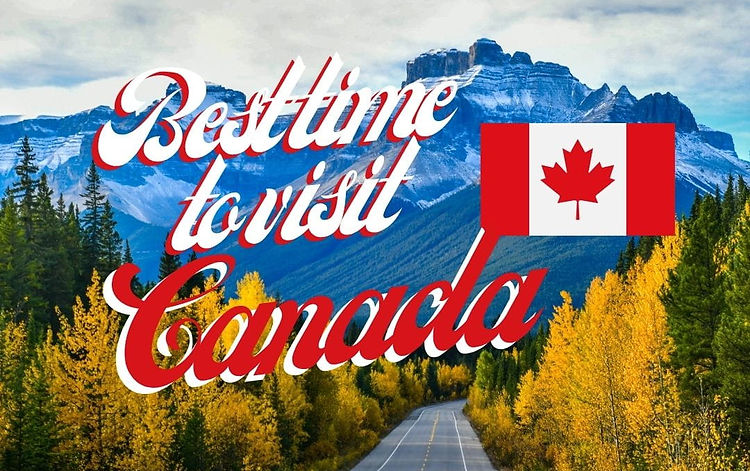
Best time to visit Canada
Canada, the second-largest country in the world, is a nation of breathtaking natural beauty and diverse landscapes spanning six time zones. From the majestic Rocky Mountains in the west and the vast prairies to the rugged Atlantic coasts in the east, this country offers a wealth of experiences that change dramatically with the seasons. Choosing the optimal time to travel to Canada therefore depends significantly on personal preferences and planned activities, as each season brings its own unique charm and specific opportunities.
Table of Contents:
Spring: Nature’s Awakening (April – May)
The Canadian spring is a time of gentle awakening and transformation. After long winters, the snowpack begins to melt, rivers swell, and nature slowly dresses itself in fresh green once again. In the southern regions and along the coasts, such as in British Columbia or the Maritimes, spring arrives earlier, offering milder temperatures that are perfect for early-season hikes or city sightseeing.
This is also the ideal time to visit the famous "Sugar Shacks" (cabanes à sucre) in Québec and Ontario, where you can witness the traditional maple syrup harvest and sample fresh maple products. Wildlife is also waking up from hibernation; bears, moose, and birds become increasingly active, providing excellent opportunities for wildlife viewing before the peak tourist season begins. While mountain regions may still hold enough snow for late-season skiers, the cities entice visitors with blooming parks and mild days that are perfect for a stroll.

Summer: The Golden Travel Season (June – August)
The Canadian summer is widely considered the most popular time to visit, and for good reason. The days are long and warm, creating optimal conditions for almost all outdoor activities. From extensive hikes in National Parks like Banff or Jasper to canoe trips on pristine lakes and rivers, and even whale watching along the coasts – the possibilities are virtually endless.
The cities are bursting with life, featuring countless festivals, street markets, and open-air events. Vancouver, Toronto, and Montreal are at their most vibrant. Parks and campgrounds operate at full capacity, and tourist hubs are buzzing with activity. This is the prime time for extensive road trips, as all roads and mountain passes are clear of snow and fully accessible.
Autumn: A Spectacle of Color (September – October)
The Canadian autumn is a truly magical time and, for many travelers, a secret favorite season. Especially in Eastern Canada—in the provinces of Ontario, Québec, and the Maritimes—the forests transform into a breathtaking sea of vibrant reds, oranges, and golds. The "Indian Summer" is a natural phenomenon that combines warm, sunny days with cool nights, intensifying the changing colors of the leaves.
This is the perfect time for:
Picturesque road trips through the countryside.
Hikes through brilliantly colored forests.
Photography of spectacular landscapes.
The temperatures are pleasantly mild, the air is crisp, and the large summer crowds have already thinned out, allowing for a more relaxed travel experience. In Western Canada, autumn is equally beautiful—though the foliage is less pronounced—and continues to offer excellent conditions for outdoor activities before the snow sets in.

Winter: A Winter Wonderland (November – March)
For lovers of snow and winter sports, Canada transforms into a true paradise during the winter months. The snow-covered landscapes of the Rocky Mountains offer world-class ski resorts such as Whistler Blackcomb, Banff Sunshine, and Lake Louise, attracting winter sports enthusiasts from across the globe.
Popular activities include:
Ice skating on frozen lakes or canals (such as Ottawa's Rideau Canal, the world's longest skating rink).
Snowmobiling and dog sledding.
Snowshoeing through pristine wilderness.
The cities, particularly Montreal and Quebec City, dress up in festive attire, offering charming Christmas markets and winter events. In Northern Canada, if you're lucky, you can witness the spectacular Northern Lights.
While temperatures can often be frigid, indoor spaces and public transport are excellently heated, and Canadians are well-versed in navigating the winter season. For those looking to experience an authentic, frosty Canada, this is the ideal time to travel—often with the added bonus of lower prices and fewer tourists.
Best Time to Travel to Canada – A Summary
Canada is a destination for all four seasons, and the "optimal" time to visit ultimately depends on your individual preferences and desired travel experience. Summer offers the widest range of outdoor activities and the most vibrant city life, while autumn stands out with its spectacular display of colors and pleasant temperatures. Spring is ideal for nature lovers wanting to witness the country’s awakening, and winter transforms Canada into a magical paradise for snow and sports enthusiasts. Regardless of the season you choose, Canada promises an unforgettable adventure full of breathtaking landscapes and diverse experiences.

Best time to visit Canada: Key Points
The optimal travel time for Canada depends heavily on your interests and the regions you wish to visit. Here is an overview to help you with your planning:
General Information
Summer (June to September)
This is the most popular time to travel, as the weather is generally warm and sunny.
Ideal for outdoor activities such as hiking, canoeing, camping, and wildlife viewing.
However, peak season also means higher prices and more tourists.
Regional Differences
West Coast (British Columbia)
The summer months are ideal for whale watching and exploring the coastal region.
May to September are good months for observing bears and salmon.
Rocky Mountains
July to September offer the best conditions for hiking and other outdoor activities.
Please note that lakes can still be frozen in May and October.
Eastern Canada (Ontario, Quebec)
Summer is ideal for exploring cities like Toronto and Montreal.
Mid-September to mid/late October is "Indian Summer," when the leaves change color and offer a stunning natural spectacle.
Northern Canada (Yukon, Northwest Territories, Nunavut)
The best travel window is short, from July to August.
Ideal for adventure and wilderness trips, as well as viewing the Northern Lights (September to May).
Further Considerations
Winter Sports: For skiing and other winter sports, the months of December to February are ideal.
Shoulder Season (May, October): These months often offer milder temperatures and fewer tourists. However, some attractions and activities may be limited.
In Summary:
For most outdoor activities and road trips, the summer months (June to September) are the best choice. Regional differences in Canada are vast, so it is important to research the specific climate of your chosen region before you depart.

Climate tables for Canada
Since Canada is the second-largest country on Earth, there is no single 'standard' climate table. The climate ranges from mild maritime conditions on the West Coast to polar frost in the Far North.
Below, you will find an overview of the three most important climate regions based on their largest cities.
Western Canada (Example: Vancouver – Pacific Climate)
The West Coast has the mildest climate in Canada. Winters are frost-free but very damp; summers are pleasantly warm but rarely hot.
Month | Avg Temp °F | Precipitation (in) |
Jan | 43 | 5.6 |
Feb | 45 | 4.3 |
Mar | 48 | 3.7 |
Apr | 52 | 2.8 |
May | 57 | 2.5 |
Jun | 62 | 1.8 |
Jul | 66 | 1.4 |
Aug | 66 | 1.5 |
Sep | 61 | 2.4 |
Oct | 54 | 4.7 |
Nov | 47 | 7.5 |
Dec | 43 | 6.6 |
Eastern Canada (Example: Toronto – Continental Climate)
Here, the seasons are extremely pronounced. Summers are often sweltering and humid (with temperatures over 86°F possible), while winters bring severe frost and heavy snow.
Month | Avg Temp °F | Precipitation (in) |
Jan | 25 | 2.0 |
Feb | 27 | 1.8 |
Mar | 36 | 2.3 |
Apr | 48 | 2.7 |
May | 59 | 3.1 |
Jun | 68 | 3.3 |
Jul | 74 | 2.8 |
Aug | 73 | 3.1 |
Sep | 66 | 3.3 |
Oct | 54 | 2.6 |
Nov | 41 | 3.0 |
Dec | 30 | 2.4 |
High Arctic Canada (Example: Nunavut / Resolute)
One of the most extreme climates in the world prevails here, with very long, dark winters and short, bright summers.
Month | Avg Temp °F | Precipitation (in) |
Jan | -18 | 0.4 |
Feb | -20 | 0.3 |
Mar | -14 | 0.3 |
Apr | -2 | 0.2 |
May | 19 | 0.3 |
Jun | 34 | 0.5 |
Jul | 41 | 0.8 |
Aug | 39 | 1.0 |
Sep | 30 | 0.7 |
Oct | 10 | 0.6 |
Nov | -4 | 0.5 |
Dec | -15 | 0.4 |
Summary: When is the Best Time to Travel?
June to August: Ideal for the entire country (hiking, national parks, cities). This is the warmest period, but also the most expensive (peak season).
September to October: The time of the Indian Summer. Spectacular autumn foliage, especially in the East (Ontario/Québec) and the Yukon.
December to March: Perfect for winter sports (Whistler, Banff) or viewing the Northern Lights (Aurora Borealis) in the North.
May to June: Great for wildlife viewing (bears emerging from hibernation); however, many hiking trails in the mountains may still be covered in snow.

Why travel to Canada?
Canada beckons travelers primarily with its seemingly endless vastness and a natural beauty that is unparalleled in its pristine state. Those who visit the country immerse themselves in a world of deep blue lakes, majestic mountain ranges, and dense forests that erupt into a spectacular sea of color, especially in autumn. It is this contrast between the rugged wilderness and the profound silence of the national parks that makes everyday life feel worlds away. Yet, the country offers far more than just postcard-perfect scenery; it is the palpable sense of freedom and the serenity of the surroundings that leave a lasting impression on every visitor.
A Harmonious Interplay of Culture and Wilderness
Beyond the nature trails, Canada captivates with its cosmopolitan metropolises, which maintain a remarkable balance between modern urbanity and warm hospitality. In cities like Vancouver or Montreal, a vibrant cultural scene meets a relaxed way of life that makes travelers feel instantly welcome. This unique blend of a safe travel destination, cultural diversity, and constant proximity to the wonders of the earth makes Canada a destination that not only satisfies wanderlust but also opens up new perspectives on living in harmony with the environment.

What are the must-see sights in Canada?
Canada is so vast that it’s best divided into regions. Whether you’re seeking the wild Rocky Mountains in the West or the charming, European-inspired flair of the East—here are the absolute highlights for 2026:
The Wild West (Alberta & British Columbia)
If you’re dreaming of postcard panoramas with turquoise lakes, this is the place for you.
Banff & Jasper National Parks: The classics. Lake Louise and Moraine Lake are absolute must-sees. Insider tip for 2026: The newly opened BASIN Glacial Waters wellness center at Lake Louise. You can book tours through the parks here!*
Icefields Parkway: This road between Banff and Jasper is considered one of the most beautiful driving routes in the world.
Vancouver: One of the world’s most livable cities. Stroll through Stanley Park or visit the Public Market on Granville Island. How about a scenic flight over Vancouver’s coastal mountains? Book your flight here!*
Vancouver Island: The town of Tofino, in particular, is legendary for its rugged Pacific coast, giant trees, and world-class whale watching.
The East (Ontario & Québec)
Here you’ll find the great metropolises and the French soul of Canada.
Niagara Falls: Only 90 minutes from Toronto. A boat trip (Hornblower Cruise) may be touristy, but the experience of standing directly in front of that giant wall of water is unbeatable. Book your tour from Toronto here!*
Toronto: This metropolis offers a breathtaking view from the CN Tower. For a more relaxed vibe, visit trendy Prince Edward County (known for its wine and white sand beaches). You can book a walking tour with CN Tower access here!*
Québec City: The only fortified city in North America. The Old Town (Vieux-Québec) feels like a piece of Europe in Canada. Book your city walking tour here!*
Montréal: The cultural heart with a fantastic food scene (be sure to try the Poutine!). Book your city walking tour here!*
For Adventurers & Nature Freaks
Newfoundland (Gros Morne National Park): Here, you can literally walk on the Earth's mantle. The fjords are spectacular and far less crowded than the Rockies.
Churchill (Manitoba): The "Polar Bear Capital of the World." In the fall, you can see polar bears in the wild; in the summer, it's all about beluga whales.
Yukon: The best place for the Northern Lights and the feeling of a true wilderness adventure (gold rush vibes included).
A quick planning tip: It’s easy to underestimate Canada's size. A flight from Vancouver to Toronto takes over 5 hours—that’s almost like flying from Berlin to Dubai! For a 2-3 week trip, it's better to stick to one coast.

When to travel to Canada?
The ideal time for a trip to Canada depends heavily on your personal interests, as the country’s vast size results in very diverse climatic conditions. For classic road trips, hiking in national parks, and wildlife viewing, the summer months from June to August are considered the best choice, allowing you to benefit from long days and pleasantly warm temperatures. Those wishing to experience the famous foliage of the Indian Summer in the east should plan their trip between mid-September and mid-October, when the forests transform into vibrant shades of red and gold. For winter sports enthusiasts, however, the Rocky Mountains offer excellent conditions and reliable snow cover between December and March.
Regional Differences and Activities
While the coastal regions in the west around Vancouver remain relatively mild year-round, travelers in the interior and the north should expect extreme temperature fluctuations. If you want to see the Northern Lights, the high north offers the best chances between September and May, with the deep winter months being particularly suitable due to the clear, dark nights. For whale watching on the Pacific or Atlantic coasts, the period from May to October is ideal; additionally, August and September offer the chance to spot bears along the rivers during the salmon run. Those looking to avoid the crowds will find a good balance of mild weather and less frequented attractions during the shoulder months of May and September.

Official Tourism Websites Canada
Planning a trip to Canada in 2026 involves navigating a mix of federal, provincial, and community-run resources. Whether you're looking for the "official" word on entry requirements or local "insider" secrets, here are the best sources to bookmark.
🇨🇦 Official National Resources
These sites provide the foundational information for any traveler, from visas to national park bookings.
Destination Canada: The official tourism board. It’s excellent for high-level inspiration, seasonal highlights (like the Northern Lights or the best fall foliage), and 2026-specific events like the FIFA World Cup.
Parks Canada: Essential for anyone visiting the Rockies, the Maritimes, or any national site. Pro-tip: Look into the Canada Strong Pass for 2026, which often offers discounted admissions or free entry to specific historic sites.
Travel.gc.ca: The "no-fluff" government site. Use this for official entry requirements (eTA vs. Visa) and travel advisories.
🗺️ Official Provincial Websites
Canada is massive, and each province manages its own tourism. These sites are often more detailed than the national one for specific road trip routes.
Province / Territory | Official Tourism Website |
British Columbia | |
Alberta | |
Ontario | |
Quebec | |
Nova Scotia | |
Newfoundland & Labrador | |
Yukon |
✍️ Useful Blogs & Local Insiders
Official sites are great for facts, but blogs give you the "vibe" and the "don't-do-this" advice.
Perfect for road-trippers. They provide very specific itineraries (e.g., "15 days in the West by RV") and practical advice on things like where to exchange currency or the best time to see the "Indian Summer" colors in Quebec.
Despite the name, they cover broader trends. Their 2026 insights focus on "Slow Travel" and the shift toward intentional, nature-based trips in Western Canada.
Specializes in "Wild Luxury" and niche experiences. If you’re looking for info on the 2026 salmon runs or remote lodges in the Broughton Archipelago, this is a top-tier resource.
4. The Planet D
Run by a Canadian couple (Dave and Deb), this is one of the most comprehensive travel blogs in the world. Their Canada section is packed with first-hand photography and "adventure-lite" tips for every province.
Quick 2026 Tip: If you're planning to visit popular spots like Banff or Bruce Peninsula, booking windows for campsites and shuttles now often open 4–6 months in advance. Check the Parks Canada site early to avoid being "waitlisted" by nature!

Entry requirements for Canada (USA & UK)
Traveling to the "Great White North" is generally a seamless process for citizens of the United Kingdom and the United States, though the specific documents required depend entirely on your nationality and your method of entry.
Entry Requirements for United States Citizens
American citizens enjoy the most straightforward entry process and do not require a visa or an Electronic Travel Authorization (eTA) to visit Canada for tourism. If you are flying, driving, or arriving by sea, you simply need a valid U.S. passport. While Canadian law technically allows for various proofs of citizenship at land borders, a passport is the only universally accepted document for all modes of travel. If you are a member of the NEXUS program, you can use your membership card as an alternative to a passport at all land, air, and sea ports of entry to expedite your crossing. Most U.S. tourists are granted a stay of up to six months upon arrival, provided the visit is for leisure or specific business activities.
Entry Requirements for British Citizens
For citizens of the United Kingdom, the requirements differ based on how you arrive in the country. If you are flying into a Canadian airport or transiting through one, you must apply for an Electronic Travel Authorization (eTA) before your departure. This digital document is linked to your passport, costs 7 CAD, and is typically approved within minutes, though it is wise to apply a few days in advance. However, if you are entering Canada by land from the United States or by sea on a cruise ship, an eTA is not required; your valid British passport is sufficient. Like American visitors, British tourists are generally permitted to stay for up to six months.

Passport Validity and Supplemental Documentation
Regardless of whether you are traveling from the UK or the USA, your passport must be valid for the entire duration of your intended stay in Canada. While there is no strict "six-month rule" for entry, it is highly recommended to have at least six months of validity to ensure you are covered for any unexpected delays. Additionally, border officials may occasionally ask to see proof of sufficient funds to support your stay or a return ticket to your home country. If you are traveling with children and both parents are not present, it is strongly advised to carry a consent letter to facilitate the immigration process and prevent delays.
Official Sources and Government Agencies
To ensure your travel plans are based on the most reliable information, you should always consult official government channels. These agencies provide the most current data on entry rules, safety advisories, and health requirements.
Government of Canada (Official Entry & Visa Info): canada.ca/en/immigration-refugees-citizenship/services/visit-canada
U.S. State Department Travel Advisory: travel.state.gov/canada
U.S. Embassy & Consulates in Canada: ca.usembassy.gov
FCDO Travel Advice (UK): gov.uk/foreign-travel-advice/canada
TravelHealthPro (Health Specifics): travelhealthpro.org.uk/country/41/canada

Payment and Mobility in Canada
Navigating Canada requires a blend of digital-first habits and a bit of "big country" planning. Whether you’re heading to the glass towers of Toronto or the rugged peaks of the Rockies, here is what you need to know about money and getting around in 2026.
Currency and Payments
Canada’s official currency is the Canadian Dollar (CAD). While it is often colloquially called "bucks," the colorful polymer banknotes and distinctive 1-dollar ("loonie") and 2-dollar ("toonie") coins are what you'll carry.
Credit & Debit Cards: Canada is a world leader in contactless payments. Visa and Mastercard are accepted nearly everywhere, from high-end boutiques to small coffee shops. American Express is widely accepted in major cities and chains but might be declined at smaller independent retailers. Most terminals use "Tap" (NFC) for transactions up to 250 CAD.
The Role of Cash: Despite the digital shift, cash remains resilient. It is still useful for small purchases at farmers' markets, tipping in some service industries, or in remote rural areas where signal for card machines can be spotty.
Digital Wallets: Apple Pay, Google Pay, and Samsung Pay are ubiquitous. You can easily spend an entire week in a city like Vancouver or Montreal without ever reaching for a physical wallet.
Public Transportation
Because Canada is the world's second-largest country, public transit varies wildly between urban centers and the vast "in-between."
Urban Transit: Major cities have robust systems. Toronto (TTC), Montreal (STM), and Vancouver (TransLink) use integrated tap-to-pay systems (like the Presto or Compass cards), and most now allow you to tap directly with your credit card or phone at the turnstile.
Intercity Travel: VIA Rail connects the "Windsor-Quebec City Corridor" efficiently, but transcontinental train travel is more of a luxury tourist experience than a quick commute. For budget intercity travel, bus lines like Megabus or FlixBus have filled the gap in many regions.
Special Events: If you are visiting in the summer of 2026, be aware that cities like Toronto and Vancouver are hosting the FIFA World Cup. Expect significant transit "Mobility Plans," increased frequency, but also heavy crowds and potential road closures in downtown cores.
Rental Cars and Driving in Canada
In most of Canada, a car isn't just a convenience—it’s a necessity for seeing the National Parks.
Requirements: You generally need to be 21 or 25 years old to rent a car (those under 25 often face "young driver" surcharges). A valid driver’s license from your home country is usually sufficient, but an International Driving Permit (IDP) is recommended if your license is not in English or French.
The Credit Card Rule: Almost all rental agencies require a major credit card (not debit) for the security deposit. They will "hold" a significant amount (often 500–1,000 CAD) on your card until the vehicle is returned.
Driving Conditions: Distances are massive. "Just one province over" can be a 15-hour drive. In winter (and even into April/May in the mountains), winter tires or snow chains are often legally required on certain highways, such as the Sea-to-Sky in BC.
Find your rental car in Canada on QEEQ.com!*

Internet in Canada
Canada offers a robust and high-speed digital infrastructure, especially in urban centers like Toronto, Vancouver, and Montreal. The market is dominated by major providers such as Rogers, Bell, and Telus.
While coverage is excellent in cities (utilizing 5G and 4G LTE), it can become spotty or non-existent in remote wilderness areas or the far north. For travelers, free Wi-Fi is widely available in airports, cafes, and hotels. However, local SIM cards can be expensive due to limited competition, often making roaming or digital alternatives more attractive for short-term visitors.
The Yesim Option
For those looking to avoid high roaming fees or the hassle of finding a physical SIM card, Yesim provides a convenient eSIM solution. Since it is a digital SIM, you can activate a Canadian data plan instantly without swapping hardware, provided your device is eSIM-compatible.
Convenience: You can purchase and install a plan via the app before you even land in Canada.
Flexibility: Yesim offers various data packages ranging from a few gigabytes to unlimited options, allowing you to pay only for what you need.
Reliability: It typically connects to the strongest available local networks (like Rogers or Telus), ensuring steady LTE/5G speeds across the country.
Put an end to expensive roaming fees and enjoy Canada at full speed. 👉 Get Yesim for Canada now and go online instantly!*

Travel health insurance for Canada
Traveling to Canada requires careful health planning due to the exceptionally high cost of medical care, which is not covered for non-residents by the country’s universal healthcare system.
While medical insurance is not strictly mandatory for all tourist visas, it is highly recommended because a single emergency room visit can exceed $1,000 CAD, and daily hospital stays often surpass $4,000 CAD. For certain visitors, such as those on an International Experience Canada (IEC) work permit or a Super Visa for parents and grandparents, proof of valid insurance for the entire duration of the stay is a mandatory entry requirement. A standard policy for Canada should ideally include:
Emergency Medical & Hospitalization: Coverage for accidents and sudden illnesses.
Repatriation: Costs for medical transport back to your home country.
Activity Riders: Additional coverage if you plan on "high-risk" activities like skiing or hiking in the Rockies.

The Auras Insurance Option
Auras is a digital-first insurance provider known for its rapid, mobile-friendly setup—often allowing travelers to secure a policy in under a minute. It is particularly popular for its flexibility and ease of use, offering a single base plan that can be customized with specific "add-ons" such as extreme sports, COVID-19 coverage, or even "alcohol condition" riders (which cover incidents occurring after alcohol consumption).
Key highlights of the Auras option include:
Instant Delivery: Policies are sent via email immediately after payment and are generally accepted by embassies for visa purposes.
"Already Traveling" Feature: Unlike many providers, Auras allows you to buy insurance even if you have already left home, provided you activate a specific 48-hour waiting period option.
Broad Eligibility: They offer coverage for travelers aged 1 to 100 and provide a 100% money-back guarantee if the policy is canceled within 14 days (and not yet activated).
Costs:
This type of travel health insurance is very affordable. For a single trip, you often pay just a few dollars. For comprehensive worldwide travel health insurance, I recommend our partner AURAS*. It can be completed online in just a few steps, and with our code "WRTY100487", you will receive an additional 10% discount on your policy.
You can find and book activities in Canada here:
Find flights to Canada here:
States in the USA

Best time to visit the USA
Here is all the information you need about the best time to visit the USA! Everything that matters, all on one page!

Best time to visit Panama
Here you will find all the information about the best time to visit Panama! Everything you need to know, all on one page!

Best time to visit Nicaragua
Here you will find all the information regarding the best time to visit Nicaragua! Everything you need to know, all on one page!

Best time to visit Mexico
Here you will find all the information about the best time to visit Mexico! Everything you need to know, all on one page!

Best time to visit Canada
Here you will find all the information regarding the best time to visit Canada! Everything you need to know, all on one page!

Best time to visit Honduras
Find all the information you need regarding the best time to visit Honduras right here! Everything that matters, all on one page!

Best time to visit Guatemala
Here you will find all the information about the best time to visit Guatemala! Everything you need to know, all on one page!

Best time to visit El Salvador
Here you will find all the information about the best time to visit El Salvador! Everything you need to know, all on one page!

Best time to visit Costa Rica
Here you’ll find everything you need to know about the best time to visit Costa Rica! All the essential info, all on one page!

Best time to visit Belize
Here you will find all the information about the best time to visit Belize! Everything you need to know, all on one page!
Check out my YouTube channel here:
Recent Blog Posts:


